
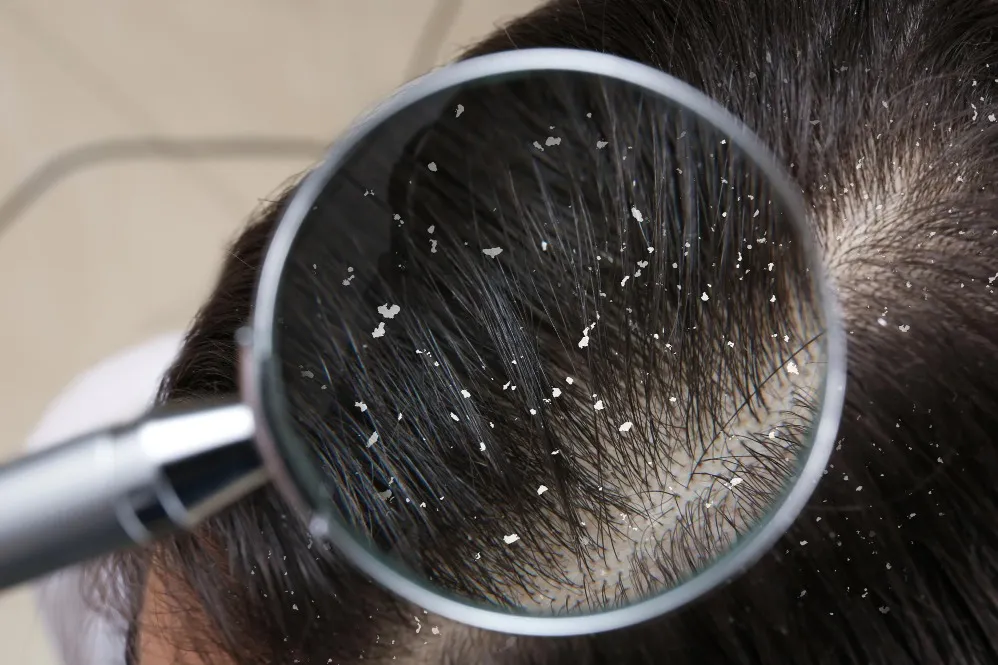
Dandruff is frequently treated as a simple hygiene issue, but persistent flaking can be more complicated. Some people experience occasional mild flakes, while others repeatedly develop itching, oily scaling, redness or visible flakes on clothing soon after washing their hair.
Effective dandruff treatment begins by understanding what is actually happening on the scalp.
Why Does Dandruff Keep Coming Back?
Several factors can contribute to scalp flaking. These may include excess oil, sensitivity to hair products, dry scalp and conditions such as seborrhoeic dermatitis.
This is why changing shampoos repeatedly does not always solve recurring dandruff.
At The Skin Edit Clinic, evaluating the scalp and associated symptoms can help distinguish ordinary occasional flaking from concerns that may need a more structured management plan.
Signs Your Dandruff Needs More Attention
Consider having persistent scalp symptoms assessed when you notice:
- Frequent or heavy flaking
- Persistent itching
- Red or irritated areas
- Greasy scales
- Flakes returning quickly after washing
- Scalp discomfort
- Increased shedding alongside scalp symptoms
Scratching an itchy scalp repeatedly may also increase irritation.
Everyday Habits That Can Affect Scalp Health
Hair-care habits matter.
Allowing sweat and oil to accumulate for long periods can worsen symptoms for some people. At the same time, excessively aggressive washing or harsh products can irritate sensitive scalps.
Product residue is another consideration. Styling products, oils and poorly rinsed conditioners can accumulate on the scalp.
People living in Navi Mumbai may also notice that heat, humidity, sweating and frequent outdoor exposure influence how oily or uncomfortable their scalp feels.
A balanced scalp-care routine should therefore consider lifestyle as well as products.
Dandruff and Hair Fall Are Not Always the Same Problem
People commonly associate dandruff directly with permanent hair loss. The relationship is more nuanced.
Scalp inflammation, severe itching and repeated scratching can contribute to increased shedding or hair breakage, but persistent hair loss can have other causes as well.
Treating flakes alone may therefore be insufficient when noticeable thinning is also present.
When Should You Stop Self-Treating?
Occasional mild dandruff may respond to suitable scalp care. However, symptoms that repeatedly return despite appropriate anti-dandruff products deserve closer evaluation.
A proper dandruff treatment plan should aim to control scaling, reduce irritation and maintain a healthier scalp environment rather than simply remove visible flakes for a day or two.
Keywords


